
What is Epoxy Flooring?
Epoxy flooring is a type of synthetic resin floor system applied over concrete substrates to create a protective and decorative surface coating. Unlike paint that simply sits on top of concrete, epoxy creates a chemical bond with the underlying surface, forming an incredibly durable, seamless floor.
The system consists of two main components that are mixed together during installation:
- Epoxy Resin (Part A): Acts as the binder and provides the base material
- Polyamine Hardener (Part B): Provides strength and triggers the chemical reaction
When these components are combined, they undergo a thermosetting chemical reaction called polymerization. This process creates tightly linked cross-polymer structures that bond exceptionally well to concrete, forming an impervious, protective barrier that’s incredibly resistant to wear and tear.
Key benefits of epoxy flooring
According to Sherwin-Williams High Performance Flooring, epoxy floors offer exceptional durability with the ability to withstand over 10,000 pounds per square inch. The seamless surface is resistant to chemicals, moisture, impacts, and abrasions while remaining easy to clean and maintain. Professionally installed epoxy flooring can last 15 to 20 years or more in residential settings, making it a cost-effective long-term flooring solution.
Additional advantages include improved safety with anti-slip additives, enhanced lighting from high-gloss finishes (improving visibility by up to 300%), and virtually unlimited color and design options to match any aesthetic preference.
Types of Epoxy Flooring Finishes Available
Understanding the different types of epoxy finishes available will help you choose the right system for your specific needs and budget. Each finish type offers unique visual characteristics and performance benefits.
Solid color epoxy
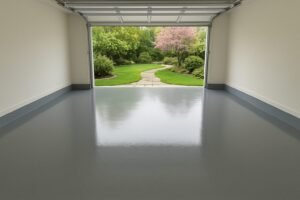
Solid color epoxy provides a uniform, single-color finish throughout the entire floor. This is the most economical epoxy option and offers a clean, professional appearance. Available in hundreds of colors with glossy, satin, or matte sheens, solid color systems are ideal for garages, basements, warehouses, and commercial spaces. The application is straightforward, making it a popular choice for both residential and light commercial applications.
Visual appearance: Smooth, seamless surface with consistent color distribution and a professional finish.
Metallic epoxy
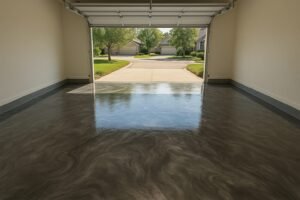
Metallic epoxy creates a stunning, shimmering three-dimensional appearance by incorporating metallic pigments (mica nano-particles) into clear epoxy resin. The result is a marble-like or liquid metal effect with swirling, flowing patterns that create depth and visual interest. Each metallic floor is completely unique—the patterns cannot be duplicated, making your floor truly one-of-a-kind.
This high-end luxury option is perfect for showrooms, retail spaces, restaurants, bars, and upscale residential areas. While metallic epoxy costs more than solid color systems, it provides the look of natural stone at a fraction of the price.
Visual appearance: Glass-like glossy finish with reflective sparkle, pearlescent effects, and unique veining similar to marble or granite.
Flake or chip epoxy
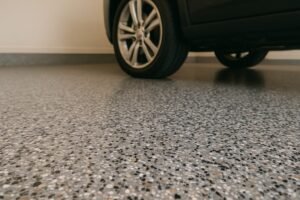
Flake epoxy systems combine durability with decorative appeal by broadcasting colored vinyl or acrylic flakes into a base coat of epoxy. The flakes are then sealed with a clear topcoat for protection. This creates a multi-colored, textured appearance resembling terrazzo flooring with a speckled, confetti-like pattern.
The textured surface provides natural slip resistance, making flake systems especially popular for garages, showrooms, basements, and high-traffic commercial areas. The decorative flakes also help hide minor imperfections, dirt, and wear patterns, making maintenance easier.
Visual appearance: Speckled terrazzo-like finish with unlimited color combinations and subtle texture throughout.
Quartz epoxy
Quartz epoxy systems combine 100% solids epoxy with colored quartz aggregates to create an attractive, slip-resistant surface. This is one of the most durable epoxy systems available, making it ideal for commercial kitchens, hospitals, laboratories, schools, and pool decks.
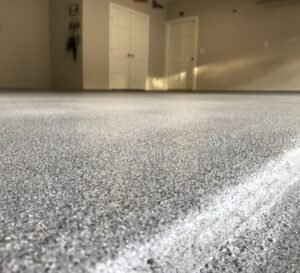
The colored quartz grains are visible throughout the floor, creating a terrazzo-like aesthetic with excellent traction. Quartz systems are typically thicker than standard coatings (1/4″ to 3/16″) and offer superior impact resistance and abrasion resistance. According to Flowcrete, quartz systems are UV stable and can include anti-microbial additives for healthcare environments.
Visual appearance: Textured, non-slip surface with colored quartz aggregates visible, available in 25+ standard color blends.
Where Epoxy Flooring is Useful
Epoxy flooring’s versatility makes it suitable for a wide range of residential, commercial, and industrial applications. Understanding where epoxy performs best will help you determine if it’s the right choice for your space. Most of the service providers in our directory can handle multiple use cases.
Residential garage floors
Garage floors are the most popular residential application for epoxy. The coating protects concrete from oil stains, tire marks, salt damage, and general wear from vehicles and foot traffic. Epoxy transforms dull, stained concrete into an attractive, easy-to-clean surface that enhances your garage’s appearance and functionality. The seamless surface prevents moisture penetration and resists hot tire pickup when properly installed.
Basement floors
Basements benefit tremendously from epoxy coatings because the seamless, waterproof surface prevents moisture seepage through concrete. This helps create healthier indoor air quality by sealing porous concrete substrates. Epoxy basement floors are perfect for recreational areas, home gyms, workshops, and storage spaces. The bright, reflective surface also improves lighting in typically dark basement areas.
Pool decks and patios
For outdoor applications around pools and on patios, UV-resistant epoxy formulations or polyaspartic coatings are essential. These systems withstand moisture, chlorine, and sun exposure while providing slip-resistant surfaces for safety. Pool deck epoxy can include decorative aggregates for added texture and a natural appearance. According to McKinnon Materials, epoxy stone systems blend high-quality epoxy with decorative natural stones for beautiful pool deck applications.
Commercial and industrial spaces
Commercial applications include retail stores, showrooms, restaurants, hospitals, offices, and schools. The durable, sanitary surfaces are USDA approved for food service environments and meet cleanroom standards for healthcare facilities. Industrial facilities benefit from epoxy’s exceptional resistance to chemicals, heavy equipment, and constant traffic. Manufacturing plants, warehouses, automotive repair shops, and distribution centers rely on epoxy for long-lasting, low-maintenance floors.
Additional applications
- Walkways and sidewalks: Outdoor concrete surfaces around homes and businesses
- Commercial kitchens: Sanitary, stain-resistant surfaces resistant to grease and spills
- Laboratories: Chemical-resistant surfaces for scientific and research facilities
- Retail showrooms: Attractive, professional appearance for customer-facing spaces
- Locker rooms: Moisture-resistant, easy-to-clean surfaces for athletic facilities
What to Expect From Installation
Understanding the installation process and timeline helps you plan accordingly and ensures you know what to expect during your epoxy flooring project.
Surface preparation (most critical step)
Proper surface preparation is absolutely critical for epoxy success. According to Xtreme Polishing Systems, inadequate preparation is the number one cause of epoxy failure. The process includes:
- Thorough cleaning: Removal of all oil, grease, dirt, and contaminants using industrial alkaline cleaners
- Concrete repair: Filling cracks, holes, and damaged areas before coating application
- Surface profiling: Diamond grinding or shot-blasting to open concrete pores and create “teeth” for bonding
- Moisture testing: Ensuring concrete moisture levels are acceptable (typically below 5% moisture content)
- Final cleaning: Removing all dust and debris before primer application
Application process
Professional epoxy installation follows a systematic approach:
- Primer coat: Creates a chemical bridge between concrete and epoxy, reducing curing time by up to 18%
- Base coat application: Main epoxy layer applied using notched squeegees or rollers for uniform thickness
- Decorative elements (if applicable): Flakes, metallics, or aggregates added while base coat is wet
- Clear topcoat: Protective layer seals the system and provides UV resistance, chemical protection, and enhanced durability
Most residential epoxy installations can be completed in 1-2 days, though this doesn’t include cure time.
Drying and curing times
Understanding the difference between drying and curing is essential. Drying refers to when the surface becomes touch-safe and tack-free, while curing is the complete chemical process where epoxy fully hardens to maximum strength.
Typical timeline for 100% solids epoxy:
- 12-18 hours: Light foot traffic allowed (walk-on time with soft shoes)
- 24-48 hours: Safe for regular foot traffic
- 72 hours (3 days): Ready for vehicle traffic and normal use
- 5-7 days: Full cure and maximum durability achieved
According to Epoxy Colorado, curing times depend on several factors including temperature, humidity, and product type. The ideal temperature range for epoxy installation is 60-85°F with humidity below 85%.
Environmental factors affecting installation
- Temperature: Warmer temperatures (70-80°F) accelerate curing; cold temperatures slow the process significantly
- Humidity: High humidity (above 85%) can interfere with bonding and should be avoided
- Ventilation: Proper airflow helps with solvent evaporation during drying
- Substrate temperature: Floor temperature is more critical than air temperature—concrete must be warm enough for proper bonding
For Dallas, Texas homeowners, the warm climate generally provides ideal conditions for epoxy installation, though summer heat requires early morning installations to avoid excessive temperatures.
Dallas, Texas Pricing Guide for Epoxy Flooring (2025)
Understanding current pricing for the Dallas market helps you budget appropriately and recognize fair pricing from contractors. Prices vary based on floor condition, square footage, finish type, and preparation requirements.
Current Dallas market pricing (2025)
According to multiple Dallas-area sources including HomeBlue and Craftsman Concrete Floors, here are typical 2025 prices for the Dallas area:
| Epoxy Type | Price Per Square Foot | Best For |
|---|---|---|
| Basic Solid Color | $3.50 – $7.00 | Budget-conscious projects, simple garage floors |
| Flake/Chip System | $6.00 – $10.00 | Standard garage floors, showrooms, residential use |
| Metallic Epoxy | $9.00 – $15.00 | High-end residential, showrooms, luxury applications |
| Quartz System | $8.00 – $12.00 | Commercial kitchens, high-traffic commercial areas |
| Industrial/Mortar Systems | $12.00 – $20.00+ | Heavy-duty industrial facilities, warehouses |
Project size pricing examples
According to HomeYou Dallas, here are typical project costs:
- 1-car garage (250 sq ft): $1,100 – $1,800 for basic epoxy; $1,500+ for flake systems
- 2-car garage (400-500 sq ft): $2,400 – $5,000 depending on system type
- Basement floor (500 sq ft): $2,300 – $3,600 for standard systems
- Large garage (1,000 sq ft): $6,000 – $8,000 for complete installation
Factors affecting pricing in Dallas
Several factors influence the final cost of your epoxy flooring project:
- Floor condition: Extensive repairs, crack filling, or leveling increase costs
- Surface preparation needs: Heavily stained or damaged floors require more prep work
- Project size: Larger projects typically have lower per-square-foot costs due to economies of scale
- Finish type and complexity: Metallic and decorative systems cost more than solid colors
- Number of coats: Multi-layer systems with primer, base, decorative, and topcoat cost more
- Removal of existing coatings: If previous coatings must be removed, expect additional charges
- Customization: Custom colors, logos, or patterns increase labor and material costs
Labor costs in Texas
Labor costs typically range from $5 to $15 per square foot in Texas, according to Craftsman Concrete Floors. This includes surface preparation, application, and finishing. Professional installation is highly recommended over DIY approaches, as proper preparation and application techniques are critical for long-term performance.
Things to Consider When Selecting a Contractor
Choosing the right epoxy flooring contractor is critical to ensuring a successful, long-lasting installation. The quality of installation matters more than the product itself—even premium materials will fail if improperly installed.
Licensing and insurance verification
According to Blackrock Industrial, verifying licensing and insurance should be your first step:
- Contractor’s license: In Texas, contractors performing epoxy flooring installations must have proper contractor licensing. Request the license number and verify it through the Texas Department of Licensing and Regulation (TDLR). Reputable contractors will provide this information immediately without hesitation.
- General liability insurance: Protects you from property damage, accidents, and bodily injury during the project. Request certificates of insurance and verify coverage is current.
- Workers’ compensation insurance: Protects you from liability if workers are injured on your property. Call the insurance company to confirm current coverage.
- Bonding: A contractor’s bond protects you if the contractor fails to complete work or doesn’t meet financial obligations. This provides additional security for your investment.
Warning sign: If a contractor hesitates to provide licensing or insurance documentation, consider this a major red flag and look elsewhere.
Experience and specialization
Look for contractors with substantial experience specifically in epoxy flooring:
- Years in business: Contractors with 5+ years demonstrate staying power and expertise
- Project portfolio: Request to see photos of completed projects similar to yours in size and scope
- Residential vs. commercial focus: Ensure their specialization matches your project type—some contractors focus exclusively on industrial or commercial work
- Manufacturer certifications: Many premium epoxy manufacturers certify installers in their products, demonstrating technical expertise
- Surface preparation expertise: Ask detailed questions about their concrete preparation methods, as this is the most critical step
References and reputation
Research the contractor’s reputation thoroughly:
- Customer references: Request contact information for 3-5 recent customers and actually call them
- Online reviews: Check Google Reviews, Better Business Bureau (BBB), Angi, and HomeAdvisor for consistent positive feedback
- Third-party platforms: Look for detailed reviews that provide specific information about work quality, communication, and professionalism
- Complaint resolution: Check BBB for any complaints and how they were resolved
- Social media presence: Review their work on platforms like Instagram or Facebook for visual examples
Material quality and warranties
Quality contractors use premium materials and stand behind their work:
- Product brands: Contractors should confidently discuss the specific brands they use and why. Vague answers about materials suggest they use whatever is cheapest.
- 100% solids epoxy: Professional-grade epoxy should be 100% solids (not water-based) for maximum durability
- Warranty coverage: Request details about warranties for both materials and workmanship. Reputable contractors offer multi-year warranties.
- Topcoat quality: Ask about UV-resistant polyurethane or polyaspartic topcoats that prevent yellowing and enhance durability
Detailed written estimates
According to Creative Maintenance Solutions, professional contractors provide comprehensive written estimates including:
- Detailed scope of work: Specific steps from preparation through final topcoat
- Material specifications: Brand names, product types, and coverage rates
- Labor breakdown: Separate line items for preparation, application, and finishing
- Timeline: Expected start date, completion date, and cure schedule
- Payment schedule: When payments are due (never pay 100% upfront)
- Warranty terms: Specific coverage for materials and workmanship
- Contingencies: How unexpected issues like extensive concrete damage will be handled
Communication and professionalism
Evaluate how contractors communicate and conduct business:
- Responsiveness: Do they return calls and emails promptly?
- Detailed explanations: Are they willing to thoroughly explain their process, materials, and approach?
- Site visit: Professional contractors insist on in-person assessments before providing quotes
- Questions asked: Quality contractors ask detailed questions about your goals, usage, and expectations
- No high-pressure tactics: Avoid contractors who pressure you for immediate decisions or demand large upfront payments
Red flags to avoid
- Contractors who can’t or won’t provide licensing and insurance documentation
- Significantly lower bids than competitors (likely cutting corners on materials or preparation)
- Requests for full payment upfront
- Vague about materials, brands, or installation methods
- Poor or inconsistent online reviews with unresolved complaints
- No written contract or warranty
- Pressure tactics to sign immediately
- Unwillingness to provide references
Frequently Asked Questions About Epoxy Flooring
How long does epoxy flooring last?
According to Paradigm Concrete Finishes, professionally installed epoxy flooring typically lasts 10 to 20 years in residential applications with proper maintenance. In harsh industrial environments, expect 5 to 10 years. The lifespan depends on factors including floor preparation quality, epoxy type, traffic levels, exposure to chemicals, and maintenance practices. Residential garage floors with moderate use can last 15-20+ years, while high-traffic commercial spaces may need recoating every 5-10 years.
Is epoxy flooring slippery when wet?
Solid color epoxy with a high-gloss finish can be slippery when wet. However, contractors can add anti-slip additives, texture, or aggregate to create slip-resistant surfaces. Flake and quartz systems naturally provide excellent traction due to their textured surfaces. For pool decks, patios, and commercial kitchens, specify slip-resistant additives during installation to enhance safety.
Can epoxy flooring be applied outdoors?
Standard epoxy has poor UV resistance and will yellow, chalk, and degrade when exposed to direct sunlight. For outdoor applications like pool decks, patios, and driveways, use UV-stable formulations or polyaspartic coatings specifically designed for exterior use. These products resist yellowing and fading while maintaining durability in sun-exposed areas.
How do I maintain and clean epoxy floors?
Epoxy flooring is remarkably low-maintenance. Regular cleaning involves sweeping or vacuuming to remove loose debris, then mopping with a mild pH-neutral detergent and water. Avoid harsh chemicals, abrasive cleaners, and steel wool that can damage the surface. For stubborn stains, use a soft-bristle brush. Promptly clean spills to prevent staining. Periodic recoating every 5-7 years can refresh the appearance and extend the floor’s lifespan.
Can epoxy be applied over existing coatings or damaged concrete?
Epoxy can sometimes be applied over existing concrete or tile, but the existing surface must be properly prepared and in good condition. Previous sealers, paints, or coatings often must be removed through grinding or shot-blasting to ensure proper adhesion. Damaged concrete should be repaired before epoxy application. Contractors will assess your specific floor condition and recommend the necessary preparation steps.
Will epoxy flooring crack?
Properly installed epoxy itself is flexible and won’t crack under normal conditions. However, if the underlying concrete cracks due to settling, moisture issues, or structural problems, those cracks may telegraph through the epoxy. This is why surface preparation and crack repair before installation are critical. Quality contractors will address existing cracks and may use crack repair products specifically designed for concrete before applying epoxy.
What is the difference between epoxy and polyaspartic coatings?
Epoxy is a thermosetting resin that cures through chemical reaction, typically taking 24-72 hours to cure. Polyaspartic coatings are a type of polyurea that cure much faster (often within 8-12 hours) and offer superior UV resistance, making them ideal for outdoor applications. Polyaspartic coatings are more flexible and temperature-tolerant than epoxy. Many professionals use a hybrid approach: epoxy base coat with a polyaspartic topcoat to combine the best properties of both systems.
Can I install epoxy flooring myself (DIY)?
While DIY epoxy kits are available at home improvement stores, professional installation is strongly recommended for several reasons. Surface preparation is the most critical step and requires specialized equipment like diamond grinders or shot-blasters. Improper preparation is the leading cause of epoxy failure. Additionally, working with 100% solids epoxy requires technical knowledge about mixing ratios, pot life, application techniques, and environmental conditions. DIY kits typically use inferior water-based products that don’t provide the same durability as professional-grade materials. The cost difference between DIY and professional installation is often modest when considering tools, materials, and the risk of failure.
Will epoxy flooring increase my home’s value?
Yes, professionally installed epoxy flooring can increase home value by improving the appearance and functionality of garages, basements, and other spaces. Buyers appreciate low-maintenance, attractive floors that protect concrete and enhance usability. Garage epoxy is especially attractive to buyers who value organization and functionality. The return on investment varies by market, but the improved aesthetics and practical benefits make homes more marketable.
What is the best time of year to install epoxy flooring in Dallas?
In Dallas, spring and fall typically offer ideal conditions for epoxy installation due to moderate temperatures (60-85°F) and lower humidity. Summer installations are possible but should be scheduled for early morning to avoid excessive heat, which can shorten working time and cause installation challenges. Winter is generally fine in Dallas due to mild temperatures, though cold snaps should be avoided. The key is maintaining proper floor temperature and humidity levels during installation and curing.